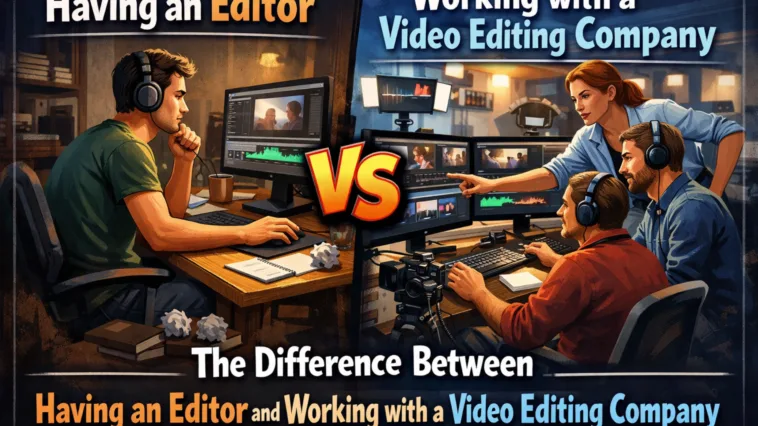
When a project wraps and footage is ready, many filmmakers and brands ask the same question: Do we need an editor, or do we need full post-production support?
On the surface, the difference may seem subtle. Both involve cutting footage and delivering a finished video. However, the scope, structure, and long-term impact of each approach are very different.
This is not about choosing between freelancers and video editing agencies in terms of talent. Skilled freelance editors bring strong creative judgment to projects every day. The distinction lies in what surrounds the edit itself — the operational framework, coordination systems, and safeguards that protect delivery timelines and client expectations.
Understanding that difference helps teams choose the right level of support for your production needs.
Check Our Video Editing Service
What an Editor Typically Provides
An editor’s responsibility is to shape raw footage into a coherent narrative.
That includes:
- Assembling sequences
- Building story
- Audio editing
- Sound design
- Color correction and grading
- Motion graphics
For short-form work, one-off films, or limited budgets, this model works well. A skilled professional executing a specific scope can deliver excellent results.
However, editing is one stage in a broader post-production process.
What a Video Editing Company Provides Beyond Basic Editing
Comprehensive post-production support extends beyond cutting footage. A professional video editing company builds a system around the entire project lifecycle.
This typically includes:
- Structured project intake and timeline mapping
- Media management and backup protocols
- Multi-layer review coordination
- Advanced color grading workflows
- Sound design and audio mixing
- Graphics and animation
- Dedicated editor
- Multi editing platform support – Resolve, Premiere or FCP
- Platform-specific exports and delivery formatting
- Review platforms like Frame.io or Dropbox Replay
Comprehensive video editing services are designed to manage a project from ingest through final export while reducing operational friction.
That structure reduces risk, improves coordination, and ensures delivery remains consistent across multiple projects.
Workflow Structure vs. Individual Execution
Individual editors often develop workflows that suit their personal style. That flexibility is valuable. As projects grow in complexity, though, informal systems can create bottlenecks.
A video editing agency typically operates with documented workflows, defined revision cycles, centralized feedback channels, and asset tracking systems. Scope changes are tracked, file versions are controlled, and review rounds follow a predictable structure.
Instead of adapting the process mid-project, their workflow structure already exists.
This becomes particularly valuable for production companies managing multiple clients or projects. Predictability allows teams to plan confidently without chasing updates or reconciling conflicting file versions.
Continuity Across Projects
One of the most overlooked differences is continuity.
A solo editor may deliver a strong final cut, but long-term collaboration depends heavily on individual availability. If schedules shift or projects overlap, continuity can become difficult.
A structured video editing team provides:
- Shared project documentation
- Standardized naming conventions
- Archival management for future updates
When multiple campaigns, recurring YouTube content, documentaries, corporate films, wedding projects, or branded series are involved, this continuity preserves both efficiency and brand alignment.
The goal is not to replace individual creative contribution — it is to support it with stability.
Resource Depth and Specialization
Post-production today often requires more than timeline assembly.
Projects may demand:
- Advanced grading pipelines
- Motion graphics and animation work
- Multi-language subtitle formatting, captions
- Platform-specific exports
- Audio mastering for broadcast or streaming
A solo editor may specialize in some of these areas. A full-service team distributes that expertise across specialists and adapts when requirements expand mid-project, without disrupting schedules.
Risk Management and Accountability
Every project encounters adjustments — revised briefs, additional footage, updated brand guidelines, evolving creative direction.
With independent editing support, resolving these shifts often depends on informal coordination.
A structured post-production environment builds accountability into its system:
- Scope changes are documented
- Delivery timelines are recalibrated transparently
- File backups protect against corruption
- Approvals are recorded
- Technical checks precede final export
Reliability comes from systems, not just talent.
And when delivery timelines are tied to client launches, marketing campaigns, or distribution schedules, that reliability becomes essential.
Video Editing Company vs Editor: When Each Model Makes Sense
Choosing between an editor and full post-production support depends on your project profile.
An individual editor may be ideal when:
- The project scope is straight forward
- There are minimal stakeholders
- Technical requirements are limited
- Freelancer would work on one project at a time
Professional video editing agency may be better suited when:
- Multiple deliverables are required
- Timelines are fixed and high-stakes
- Brand consistency must be maintained across campaigns
- Projects involve layered creative and technical elements
- Ongoing collaboration is expected
Why Structured Post-Production Support Becomes a Competitive Advantage
As content demands increase across platforms and campaigns, editing is no longer an isolated task. It operates within a broader ecosystem of approvals, branding alignment, distribution planning, and delivery schedules.
Partnering with a professional video editing agency allows filmmakers, content creators, brands, and production teams to focus on creative direction while an organized framework protects timelines and delivery standards.
At Motion Edits, our video editing services combine creative execution with defined workflows that scale with your needs. Because having an editor shapes your footage — but comprehensive post-production support protects your production from risk, inconsistency, and unnecessary friction.
And in fast-moving production environments, that distinction often defines how smoothly your projects move from raw footage to final release.
Check Our Video Editing Service