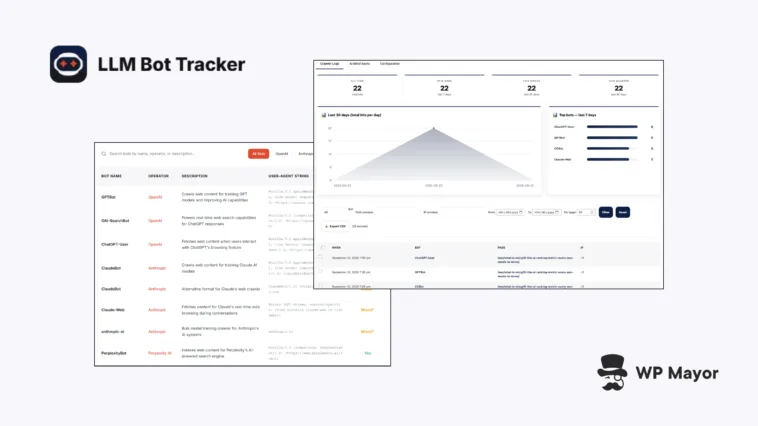
Search behavior has shifted over the past few years. Large Language Model (LLM) systems such as ChatGPT, Claude, and Perplexity can now serve you answers that would previously come through traditional search engines. These platforms access and process website content through specialized crawlers, yet this activity remains invisible in standard analytics reports.
This blind spot means you can see which people visit your site but have no visibility into how LLMs interact with your content. In this discovery post, I’m going to look at how the LLM Bot Tracker plugin monitors over 50 AI crawlers to provide detailed analytics about which content they access.
How LLM Bot Tracker Addresses the Visibility Gap in AI Crawler Activity
Web analytics platforms such as Google Analytics removes bot traffic from reports because they focus on measuring human behavior. This approach makes sense if you consider search engines to be the primary discovery channel and see bots as responsible for indexing.
However, Artification Intelligence (AI) platforms and LLMs use crawled content for training and to generate direct answers to user queries.

The LLM Bot Tracker WordPress plugin hopes to solve this by identifying and tracking AI crawlers in real time. It monitors systems from OpenAI, Anthropic, Google, Meta, and dozens of others. In return, you get analytics about which pages AI crawlers access, how frequently they visit, and which content types receive attention.

With the data in hand, you can carry out Large Language Model Optimization (LLMO) for your site’s content. For example, you can identify which pages hold value for AI training and make informed decisions about letting specific crawlers through your robots.txt configuration. The plugin also helps detect unwanted scrapers that consume server resources without providing value.
The plugin stores all data locally within your WordPress database and makes zero external API calls. This architecture gives you complete ownership of your analytics while maintaining GDPR compliance; the system tracks only identified bot activity and never monitors human visitors. What’s more, there are no cookies or third-party services that receive your data.
The Core Features That Power AI Crawler Tracking
LLM Bot Tracker uses pattern matching to identify any LLM or AI systems as they access your site. The plugin recognizes crawlers through their user-agent strings and maintains a database of over 50 unique AI bots across 15 categories.
You’ll access crawler data through the Tools > LLM Crawler Logs page within WordPress. Here, you can see which pages each crawler accessed, timestamps for each visit, frequency patterns over time, and more.

The plugin monitors bandwidth usage for each bot type so you can see which crawlers consume the most server resources. What’s more, you can track whether crawlers honor your robots.txt directives, which lets you verify compliance with your access preferences.
There’s also a page that lets you see how well your content is optimized for LLMs, which I think is super valuable:

Finally, if you want programmatic access to the crawler database, you can use the dedicated API endpoint. This updates weekly as new bots emerge and includes technical details such as user-agent strings for each system.
Who Will Find Value in LLM Bot Tracker
On the surface, LLM Bit Tracker seems to have a narrow scope. However, there are a few different use cases for the plugin in my opinion:
- Content creation. If you know which articles and topics AI will prioritize, you can adapt your future content strategies.
- Web agencies. Understanding AI crawler patterns across different industries and content types can help you make informed recommendations about content strategy in the context of AI-powered search. The API will also help you build custom reporting tools or integrate crawler data into existing client dashboards.
- Intellectual property concerns. You can track which LLMs access your content and make strategic decisions about blocking specific crawlers. You’re able to do this through robots.txt rather than blanket blocking that might reduce legitimate AI visibility.
- Developers and technical teams. In addition to building with the API, you can automate crawler management across multiple WordPress installations. With the JSON endpoint and Model Context Protocol support you can integrate with various development workflows and AI assistant tools.
However, in my opinion given the cost and quick setup, LLM Bot Tracker is going to satisfy even a passing curiosity in how AI interacts with your site. At the very least you get to fill the data gaps in your current analytics system.
Speaking of which, I would typically have a section talking about pricing and support here. However, there’s no need because LLM Bot Tracker is 100 percent free and (according to the developer) will be forever! As for support, you can access the WordPress.org support forms or contact Hueston directly through its website.
My Thoughts on LLM Bot Tracker’s Approach to AI Analytics
LLM Bot Tracker slots into a critical area of analysis: that of AI search visibility. The plugin clues you into activity that traditional analytics deliberately exclude. In turn, this lets you make informed decisions about content optimization for AI systems. That the plugin is free is an excellent bonus. What’s more, the local data storage approach addresses privacy and ownership concerns that matter when tracking any site activity.
Does this LLM Bot Tracker discovery post change how you think about monitoring your website analytics? Share your perspective in the comments section below!